How to Choose the Right Downspout Diverter for Rain Barrels
By Rainwater Directory Team
Updated January 12, 2025
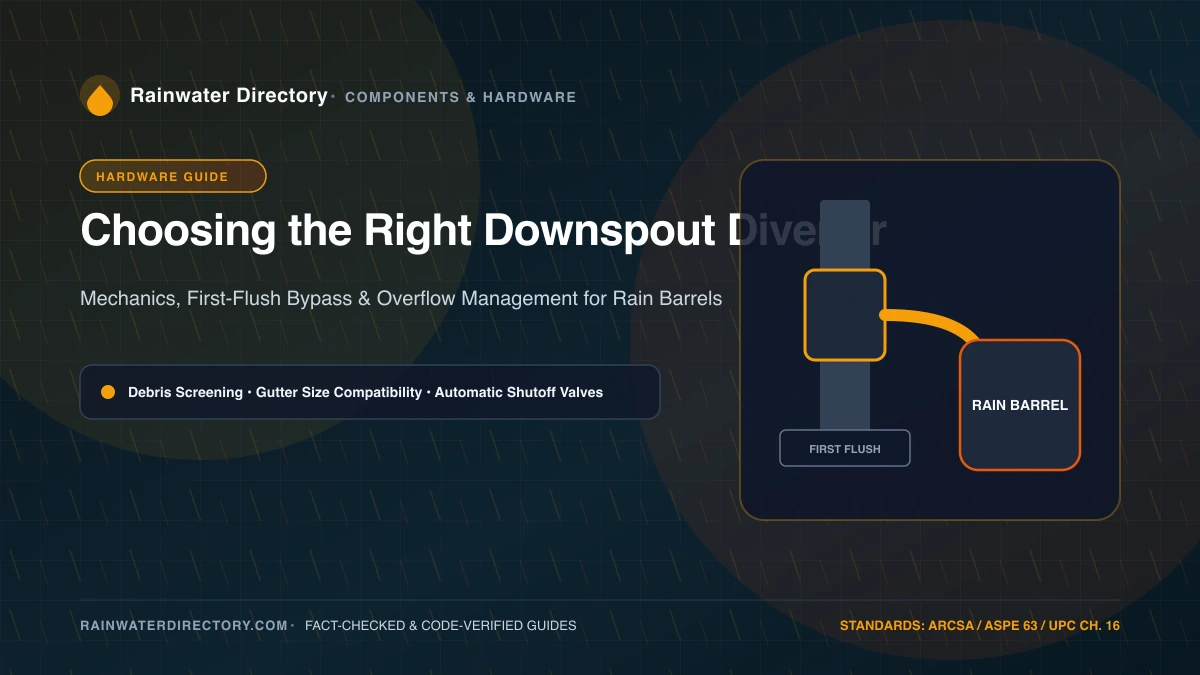
The downspout diverter is the small part that makes everything work. Choose one that fits your gutter, handles your rainfall, and simplifies maintenance.
First flush diverter or downspout diverter?
A downspout diverter routes roof runoff into storage and may bypass the tank when it is full. A first flush diverter isolates the earliest runoff, which can carry roof dust, pollen, and debris. Some products combine these functions, but many do not. Check the product diagram rather than assuming a basic barrel kit includes first-flush treatment.
There is no universal diversion volume that fits every roof. Roof material, local dust and wildlife, intended water use, and the length of the dry period all affect the choice. Follow the manufacturer’s sizing instructions and any local health or plumbing rules. A serviceable cleanout and a controlled drain make maintenance easier.
Common diverter types
- In‑line drop‑in: Inserts into vertical downspout; easy retrofits; good for 50–200 gal barrels.
- Flexible hose kits: Simple installs; watch for kinks and UV aging.
- High‑flow in‑line boxes: Better for heavy rain and multiple barrels.
- Y‑diverters with shutoff: Manual control and easy winter bypass.
Fit matters: gutter shapes and sizes
- Round vs. rectangular: Match the kit to your profile; use manufacturer templates.
- 2×3 vs. 3×4 in.: Larger downspouts move more water; choose high‑flow diverters for 3×4.
- Fascia/space constraints: Slim diverters or offset fittings may be needed.
Right-sizing for rainfall
- Estimate peak downspout flow by roof area feeding it and local rainfall intensity.
- For frequent heavy storms, prefer high‑flow diverters and large, screened overflows.
Installation tips
- Keep the barrel elevated for hose pressure and spigot access.
- Seal lids; add basket screens and first‑flush if possible.
- Route overflow away from foundations; equalize levels if daisy‑chaining barrels.
Winterizing
- Use Y‑diverter or seasonal caps to bypass the barrel.
- Drain barrels before freeze; store hoses and open valves.
Related guides
Disclaimer: Follow manufacturer templates and local code. This guide is for education only.