Insights & Guides
Source review in progress
The Complete Rainwater Collection System for Homes: Tanks, Filters & Diverters Explained
By Rainwater Directory Team
Updated January 7, 2025
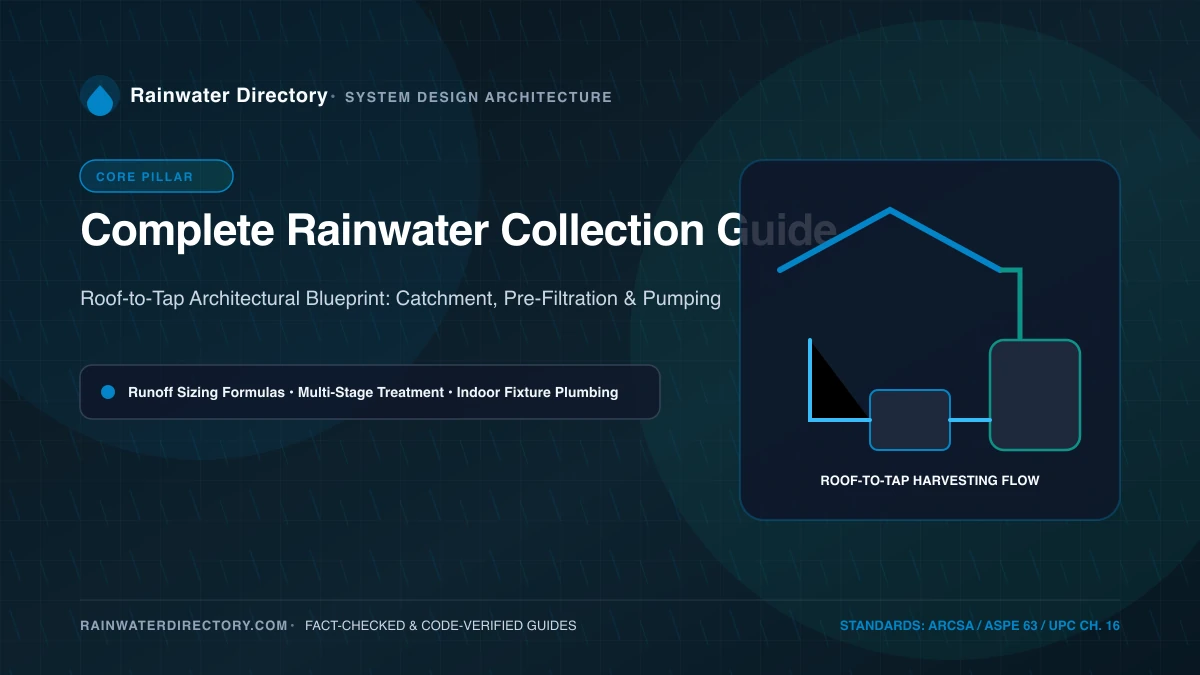
This pillar guide walks you through every piece of a modern residential rainwater system—from gutters to storage, pumps, and treatment—so you can plan confidently and meet code.
System overview (from roof to tap)
- Catchment: Roof, gutters, downspouts.
- Pre‑screening: Leaf guards, basket strainers, first‑flush diverter.
- Conveyance: Piping to storage with unions for service and cleanouts.
- Storage: Above‑ground tanks or underground cisterns sized for your climate and demand.
- Treatment: Sediment + carbon filtration; UV or chlorine if potable or for whole‑house non‑potable.
- Distribution: Pump + pressure tank + controls; labeled non‑potable or potable per code.
Sizing the system
- Annual capture estimate: Roof area (sq ft) × annual rainfall (in) × 0.62 ≈ gallons/year.
- Practical storage: Size for dry spells (weeks, not months) unless you have extreme seasonality.
- Use matching: Irrigation‑only systems can be smaller; whole‑house or fire reserve requires larger storage and robust controls.
Storage options
- Above‑ground polyethylene: Economical, UV‑stabilized, easy to install; protect from sunlight and freezing.
- Corrugated steel w/ liner: Scalable to large volumes; popular for whole‑house and farms.
- Fiberglass: Durable, underground‑capable variants available.
- Concrete cistern: Long life, underground, can buffer pH; heavier install.
- Bladder tanks: Low‑profile/indoor crawlspace options.
Treatment and plumbing
- Non‑potable (irrigation, toilets, laundry): Typically sediment + optional carbon, labeled piping, and backflow prevention.
- Potable: Add disinfection (UV or chlorine). Include sample ports and maintenance log.
- Whole‑house filtration options: /blog/ultimate-guide-whole-house-water-filtration
Controls and safety
- Pump protection: Dry‑run sensors and low‑level cutoffs.
- Municipal backup: Air‑gap or break tank; never hard‑connect pressurized city water to storage without proper backflow protection.
- Overflow: Screened, directed away from foundations or to landscaping.
Code and permitting
- When permits apply: Underground tanks, electrical for pumps, plumbing tie‑ins, trenching.
- Labeling: “Non‑potable water—Do Not Drink” where required.
- Local rules vary—start with your city building department and state plumbing/health code.
Next steps
- Tanks comparison: /blog/top-10-water-storage-tanks-100-to-5000-gallons
- Diverters and first‑flush: /blog/choose-right-downspout-diverter-rain-barrels
- DIY rain barrels: /blog/diy-rain-barrel-systems-garden
- Legal overview: Is It Illegal to Collect Rainwater? 50-State Guide
Disclaimer: Planning information only. Consult local code and a licensed installer for design and permitting.