Insights & Guides
Source review in progress
Rainwater vs Tap Water: Which Is Better for Plants, Cleaning, and Daily Use?
By Rainwater Directory Team
Updated January 10, 2025
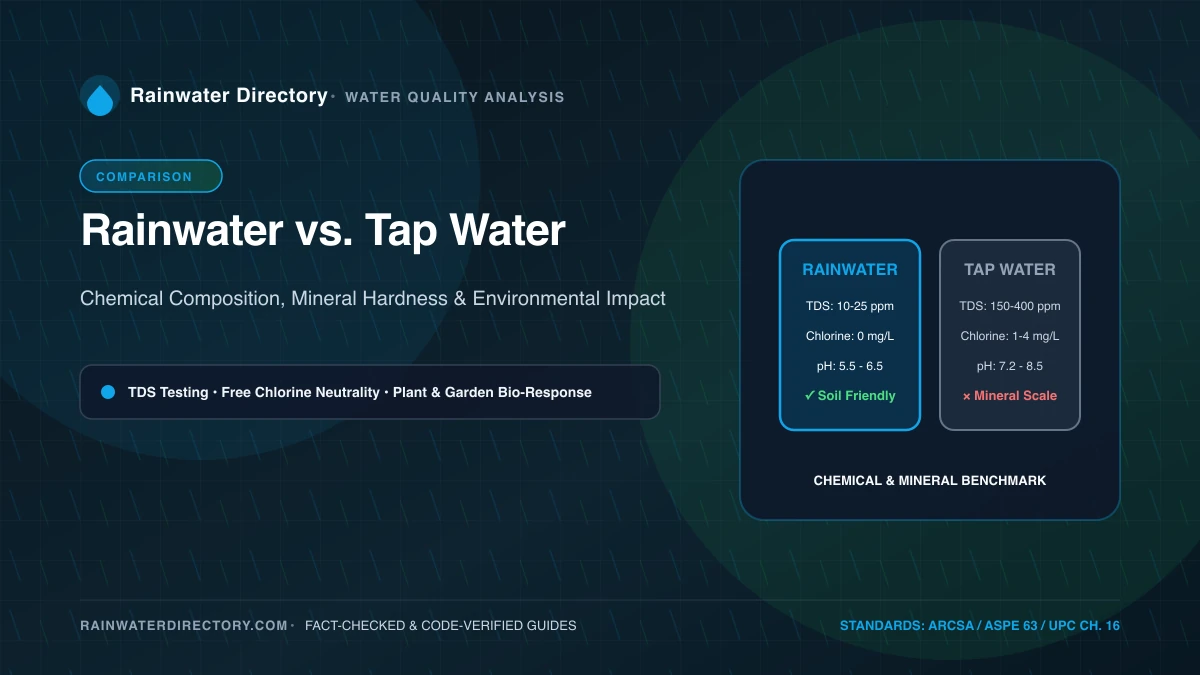
Rainwater and tap water both have roles at home. Rainwater excels for plants and some cleaning tasks, while tap water offers reliable, regulated potability. Here’s a clear, practical comparison.
Key differences
- Hardness/minerals: Rainwater is naturally soft (low calcium/magnesium). Tap can be hard depending on source.
- Disinfection: Tap water is treated and monitored; rainwater is not unless you treat it.
- pH: Rainwater tends to be slightly acidic; tap varies (often adjusted for corrosion control).
- Additives: Tap may contain chlorine/chloramine; rainwater does not.
Best for plants
- Rainwater: Soft and low in salts—great for houseplants, seedlings, and sensitive species.
- Tap water: Fine for most outdoor plants; consider letting chlorinated water stand or using carbon filtration for sensitive plants.
Best for cleaning
- Rainwater: Soft water reduces soap use and spots on glass; great for car washing and windows.
- Tap water: Always safe for hygiene tasks; hardness may leave scale without softening.
Daily use and drinking
- Tap water: Designed for potable use and microbial safety; routinely tested.
- Rainwater: Treat as non‑potable unless you use an approved filtration + disinfection train and code permits potable use. See /blog/can-you-drink-rainwater-cdc-science and /blog/ultimate-guide-whole-house-water-filtration.
Simple experiments (backlink‑worthy!)
- Plant growth: Compare seedling trays using rain vs. tap over 4–6 weeks, hold soil and light constant.
- Soap test: Measure detergent needed to reach suds in rain vs. tap; photograph outcomes.
- Spotting: Wash identical panels of glass/metal; compare spotting after drying.
Making rainwater more versatile
- Pre‑screen + first‑flush diverter.
- Sediment + carbon filtration for odor/taste and particles.
- UV or chlorine if potable or for whole‑house non‑potable loops.
Related reads
- DIY barrels for garden use: /blog/diy-rain-barrel-systems-garden
- Full system components: /blog/complete-rainwater-collection-system-guide
Disclaimer: Educational content only. For potable systems, follow local code and consult a qualified installer.