Insights & Guides
Source review in progress
Cistern Systems 101: How Underground Water Tanks Save Space and Money
By Rainwater Directory Team
Updated January 11, 2025
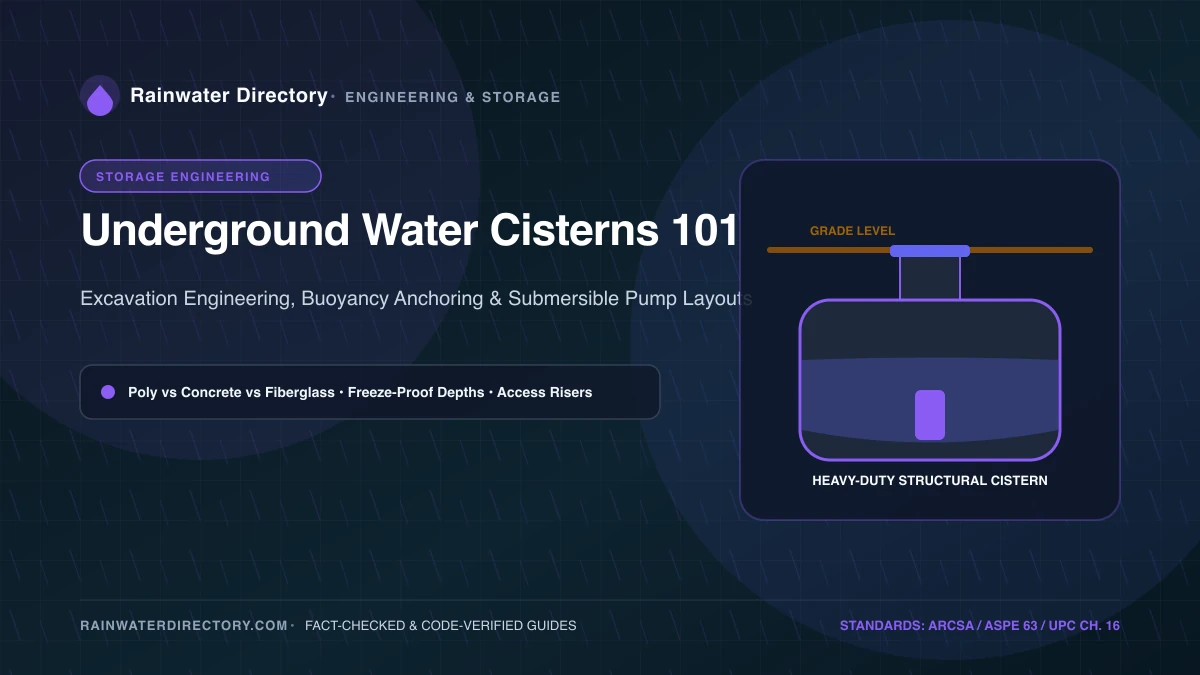
When you need large storage and clean aesthetics, underground cisterns are compelling. Here’s how they compare to above‑ground tanks and wells, and what to expect from installation to maintenance.
Why choose an underground cistern
- Space & aesthetics: Hide large volumes and keep landscapes tidy.
- Thermal stability: Cooler, darker water with less algae risk.
- Noise & protection: Equipment can be isolated; less UV/weather exposure.
Common materials
- Concrete: Long life, traffic‑rated options, good buoyancy resistance.
- Fiberglass: Lightweight compared to concrete, inert, factory‑built.
- Polyethylene modules/cells: Used with liners and geotextile in engineered systems.
Cost snapshot (very general)
- Tank: $2–$6 per gallon depending on material/size.
- Excavation + backfill: Highly site‑specific; add for shoring and spoils removal.
- Plumbing/electrical: Pump, controls, floats, backflow prevention.
- Total install: Small systems often $8k–$25k; large/fire‑reserve much more. Get local quotes.
Design considerations
- Groundwater and buoyancy: Anti‑floatation measures may be required.
- Traffic loads: Choose traffic‑rated lids if under driveways.
- Access: Manways for inspection and cleaning; safe confined‑space practices.
- Overflow & drainage: Route away from foundations; protect from erosion.
Cistern vs. well vs. above‑ground
- Cistern vs. well: Wells provide a source but may be mineral‑heavy; cisterns store captured or delivered water.
- Underground vs. above‑ground: Underground hides volume and moderates temperature; above‑ground is cheaper and simpler to service.
Code and permitting
- Permits likely for excavation, plumbing, and electrical.
- Backflow protection, labeling, and potable treatment rules apply if tied into home plumbing.
- Start with your local building department; see our State-by-State Rainwater Harvesting Laws Guide.
Related guides
- Tank comparisons by use case: /blog/top-10-water-storage-tanks-100-to-5000-gallons
- Whole‑house filtration and disinfection: /blog/ultimate-guide-whole-house-water-filtration
- Full system components: /blog/complete-rainwater-collection-system-guide
Disclaimer: Costs and rules vary widely. Get site‑specific advice from a licensed installer.