Can You Drink Rainwater? Here’s What Science and the CDC Say
By Rainwater Directory Team
Updated January 6, 2025
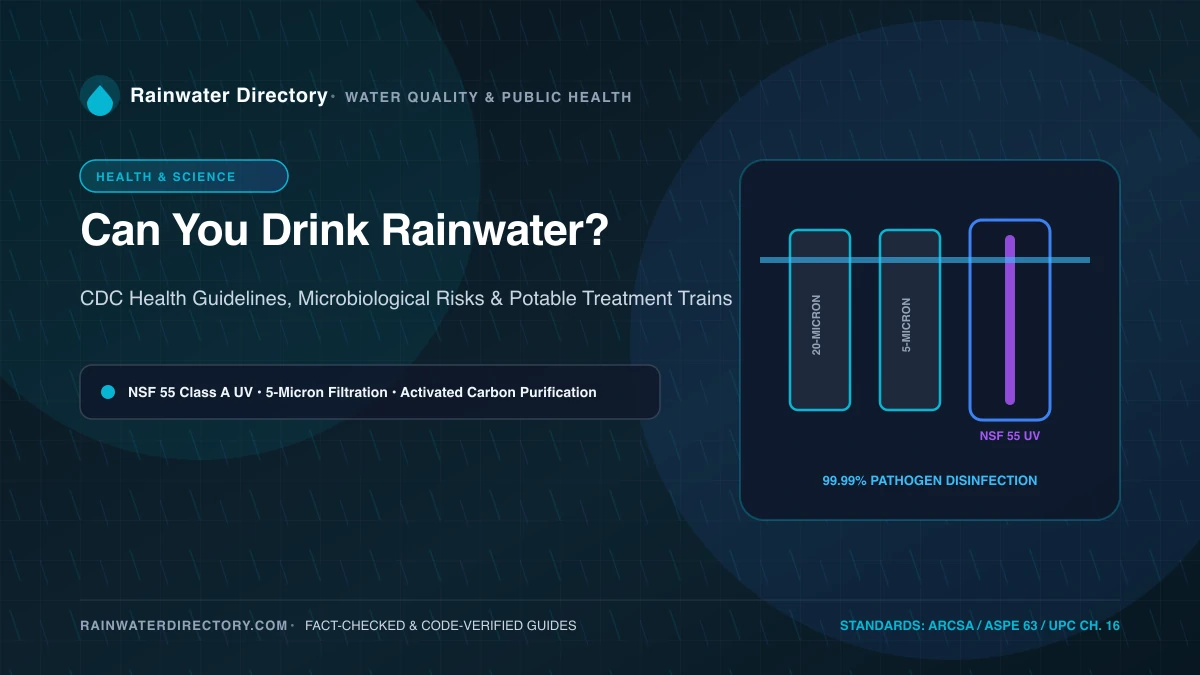
The bottom line: Untreated rainwater is not considered safe to drink. The CDC and many state health codes classify roof‑collected rainwater as non‑potable by default because it can contain dust, pollen, smoke residue, bird droppings, and pathogens. With a properly designed system, you can treat rainwater to potable standards where local code allows it.
Why untreated rainwater isn’t potable
- Collection surfaces: Roofs accumulate organic material and contaminants.
- Airborne particulates: Dust, soot, and pollen wash into first flushes.
- Storage conditions: Warm, light‑exposed tanks can promote microbial growth.
When potable rainwater is allowed (check your code)
- Many jurisdictions allow rainwater for drinking if you meet plumbing/health code. Typical requirements include multi‑stage filtration, an approved disinfectant (e.g., UV or chlorine), labeling, and backflow protection.
- Some places restrict potable use to specific building types or require engineered plans and permitting.
Core treatment train for potable rainwater
- Pre‑screening: Leaf screens and a first‑flush diverter to shed debris from the roof.
- Sediment filtration: 50–100 µm prefilter → 20–10 µm → 5–1 µm stages (replaceable cartridges or backwashable filters).
- Activated carbon: Reduces taste/odors and many organic compounds.
- Disinfection: UV reactor sized for your peak flow, or chlorine with contact time and residual monitoring.
- Storage hygiene: Opaque tank, sealed lids, screened vents/overflows, periodic inspection and cleaning.
Good practices that improve safety
- Use inert, potable‑rated materials (tanks, pipes, sealants). Avoid roofing materials that leach harmful compounds.
- Keep water dark, cool, and sealed; minimize stagnation with periodic turnover.
- Install sample ports and keep a simple maintenance log (filter changes, UV lamp age, chlorine residual checks).
- Test water periodically, especially after system changes or long storage.
Emergency vs. everyday use
- Emergency: Boiling (1 minute rolling boil; longer at altitude) is effective for microbial safety but does not remove chemicals.
- Everyday: Use a full treatment train with redundancy (e.g., UV plus residual chlorine) and routine maintenance.
Common questions
- Can I drink rainwater straight from a barrel? No—treat first and confirm local code.
- Is rainwater cleaner than tap? Not without treatment; municipal tap is continuously monitored and disinfected.
- Do I need reverse osmosis? Not usually for rainwater; RO is common for mineral‑heavy well water. For rainwater, sediment + carbon + UV is typical.
Related guides
- Whole‑house filtration options: /blog/ultimate-guide-whole-house-water-filtration
- Full system components overview: /blog/complete-rainwater-collection-system-guide
- Downspout diverters and first flush: /blog/choose-right-downspout-diverter-rain-barrels
Disclaimer: This article is educational, not medical or engineering advice. Always follow your local health and plumbing codes.